From a small coin dealer in Frankfurt to one of history’s most influential banking dynasties, the Rothschild family changed the way money moved across Europe. Their story is not about mystery or conspiracy—it is about strategy, trust, innovation, and long-term thinking.
For more than 250 years, the Rothschild name has been associated with finance, investment, and wealth preservation. While countless myths surround the family, the documented history is fascinating enough on its own.
So how did the Rothschild family build Europe’s first financial empire? Let’s explore the real story behind one of the most successful family businesses ever created.
Who Was Mayer Amschel Rothschild?
The Rothschild empire began with Mayer Amschel Rothschild, who was born in Frankfurt, Germany, in 1744.
Raised in a modest Jewish household, Mayer started his career as a coin dealer and financial trader. Through hard work and careful networking, he gained the trust of wealthy clients and eventually became a financial adviser to William IX, Landgrave of Hesse-Kassel, one of Europe’s richest rulers.
This relationship provided access to capital, influential connections, and opportunities that would help lay the foundation for a future financial empire.
However, Mayer’s greatest achievement was not building a local banking business—it was creating a global vision.
The Five Brothers Who Changed European Banking
Mayer Rothschild understood something many business owners still struggle to grasp today:
Growth requires expansion beyond your local market.
Instead of keeping the business in Frankfurt, he strategically positioned each of his five sons in major European financial centers:
| Son | City |
|---|---|
| Amschel Rothschild | Frankfurt |
| Nathan Rothschild | London |
| James Rothschild | Paris |
| Salomon Rothschild | Vienna |
| Carl Rothschild | Naples |
This network allowed the family to operate across Europe while maintaining complete trust and coordination between offices.
At a time when international business was slow and complicated, the Rothschilds created something revolutionary: a family-controlled banking network spanning multiple countries.
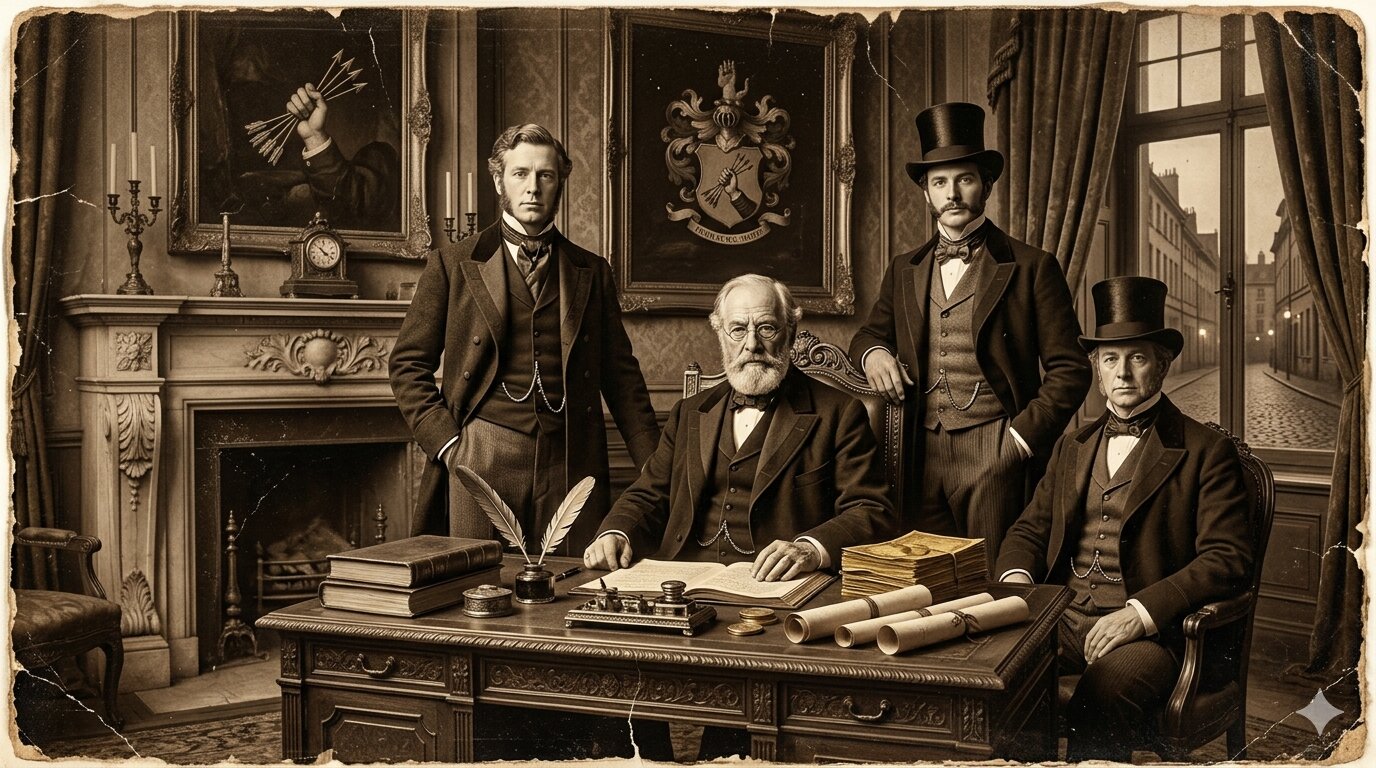
The Secret Wasn’t Money—It Was Information
Today, information travels instantly.
In the early 1800s, news could take days or even weeks to reach another country.
The Rothschild family recognized that information could be just as valuable as money.
To stay ahead of competitors, they developed private communication networks using couriers, business agents, and trusted contacts across Europe.
This system enabled them to receive important economic and political news faster than many rivals.
Being informed early allowed them to make smarter business decisions, identify opportunities, and manage risks more effectively.
Their advantage wasn’t a secret formula—it was superior communication and organization.
Financing Governments During Critical Times
The Napoleonic Wars created enormous financial challenges across Europe.
Governments needed money to fund military campaigns, move resources, and manage growing public expenses.
The Rothschild family became known for solving complex financial problems that many traditional institutions could not handle.
Using their international network, they helped governments transfer funds across borders efficiently and securely.
This reliability earned them the trust of powerful leaders and established the family as one of Europe’s leading financial intermediaries.
As government borrowing increased, the Rothschilds became major participants in international bond markets, further expanding their influence.
Building a Reputation Money Couldn’t Buy
Many businesses focus on selling products.
The Rothschilds focused on building trust.
Their clients included:
- Governments
- Royal families
- Merchants
- Investors
- Industrialists
In an era when international transactions carried significant risks, trust became one of the family’s most valuable assets.
Because each branch was managed by a family member, clients knew they were dealing with a coordinated and reliable network.
Over time, the Rothschild name became synonymous with financial credibility throughout Europe.
Expanding Beyond Banking
The Rothschild family understood an important investment principle:
Never depend on a single source of income.
As their banking operations grew, they expanded into industries that were shaping the future economy.
Their investments included:
- Railways
- Mining
- Infrastructure
- Real estate
- Agriculture
- Government bonds
- Industrial development
This diversification helped protect the family’s wealth during economic downturns and political uncertainty.
The Rothschild Family Investment Portfolio
One of the reasons the Rothschild family remained successful for generations is that they continuously adapted to changing markets.
Rather than concentrating their wealth in a single sector, they built a diversified portfolio spanning finance, natural resources, transportation, luxury assets, and investment management.
Let’s look at some of the most notable businesses and assets associated with the Rothschild name.
1. Rothschild & Co
This is the modern flagship business most closely associated with the Rothschild family.
Its services include:
- Financial advisory
- Mergers and acquisitions
- Asset management
- Wealth management
- Merchant banking
Today, Rothschild & Co serves clients across Europe, North America, Asia, the Middle East, and other global markets.
2. Edmond de Rothschild Group
Established by the Edmond de Rothschild branch of the family, this company focuses on:
- Private banking
- Wealth management
- Asset management
- Private equity
- Sustainable investment strategies
The group remains one of the best-known family-linked financial institutions today.
3. RIT Capital Partners
Founded by Jacob Rothschild, RIT Capital Partners became known for its diversified investment approach.
Its portfolio historically included:
- Global equities
- Private businesses
- Venture investments
- Alternative assets
The goal was long-term wealth preservation rather than short-term speculation.
4. Historical Mining Investments
The Rothschild family played a significant role in financing mining and resource projects during Europe’s industrial expansion.
One notable example is:
Rio Tinto
Although the family does not control the company today, Rothschild capital helped support the growth of mining ventures during earlier periods of industrial development.
5. Historical Connections to the Diamond Industry
De Beers
Throughout history, Rothschild banking operations participated in financing resource and mining-related enterprises, including ventures connected to the diamond industry.
6. Luxury Wine Estates
The Rothschild family is also known for owning some of the world’s most prestigious vineyards.
Château Lafite Rothschild
Often considered one of the finest wine estates in the world.
Château Mouton Rothschild
A globally recognized producer of premium wines and collectible vintages.
Domaines Barons de Rothschild
Operates wine estates and premium wine ventures in multiple countries.
7. Real Estate, Infrastructure, and Private Investments
Various Rothschild family investment vehicles have participated in:
- Commercial real estate
- Agricultural land
- Energy projects
- Infrastructure funds
- Transportation investments
- Private equity ventures
These investments reflect the family’s long-standing strategy of owning productive assets with long-term growth potential.
| Sector | Notable Assets & Companies |
|---|---|
| Banking | Rothschild & Co, Edmond de Rothschild Group |
| Investment Management | RIT Capital Partners |
| Mining | Historical involvement with Rio Tinto |
| Resource Finance | Historical financing links with De Beers |
| Wine | Château Lafite Rothschild, Château Mouton Rothschild |
| Real Estate | Estates and property holdings |
| Infrastructure | Transportation and energy investments |
| Wealth Management | Rothschild & Co, Edmond de Rothschild Group |
The Long-Term Strategy Behind Their Success
One lesson stands out when studying the Rothschild family:
They focused on decades, not quarters.
Their strategy emphasized:
- Relationship building
- Capital preservation
- Diversification
- Reputation management
- Generational planning
This long-term mindset helped the family survive wars, recessions, political upheavals, and changing economic environments.
Many fortunes disappear within a generation.
The Rothschild name has remained relevant for more than two centuries.
Myths vs. Reality
No discussion of the Rothschild family would be complete without addressing common misconceptions.
Over the years, various claims have circulated online suggesting that the Rothschilds secretly control governments, central banks, or the global economy.
There is no credible evidence supporting these claims.
The documented history shows a family that achieved extraordinary success through banking innovation, international networking, disciplined investing, and strong business relationships.
Their real accomplishments are impressive enough without relying on myths or speculation.
What Modern Entrepreneurs Can Learn from the Rothschild Family
The Rothschild story offers valuable lessons for today’s business owners and investors.
Build Strong Networks
Relationships often create opportunities that money alone cannot buy.
Value Information
Better information leads to better decisions.
Diversify Wisely
Avoid depending on a single income source or investment.
Protect Your Reputation
Trust can take years to build and minutes to lose.
Think Long-Term
Sustainable wealth is usually built through patience and consistency.
Conclusion
The Rothschild family’s rise from a small trading business in Frankfurt to one of history’s most influential financial dynasties is a remarkable example of strategic thinking, innovation, and long-term planning.
Their success was not built overnight, nor was it based on myths or secret control of global markets. Instead, it came from creating a trusted international network, adapting to economic change, and investing in opportunities that shaped Europe’s future.
More than 250 years later, their story remains one of the most fascinating case studies in business, investing, and wealth preservation.
Frequently Asked Questions (FAQ)
Who founded the Rothschild financial empire?
Mayer Amschel Rothschild founded the family banking business in Frankfurt, Germany, during the 18th century.
Why did the Rothschild family become so successful?
Their success was driven by international banking networks, strong client relationships, access to information, and long-term investment strategies.
What companies are associated with the Rothschild family today?
Some of the most notable include Rothschild & Co, Edmond de Rothschild Group, and historical investment vehicles connected to the family’s various branches.
Do the Rothschilds still own banks?
Yes. Different branches of the family remain involved in banking, wealth management, investment advisory, and asset management businesses.
What is the biggest lesson from the Rothschild story?
The importance of trust, diversification, long-term thinking, and building strong networks across markets and industries.



0 Comments