Every four years, the FIFA World Cup captures the attention of billions of people around the globe. Fans gather in homes, sports bars, stadiums, and public viewing areas to support their favorite teams and celebrate the world’s most popular sport. But beyond the goals, trophies, and unforgettable moments lies another story—one that revolves around money, marketing, and business.
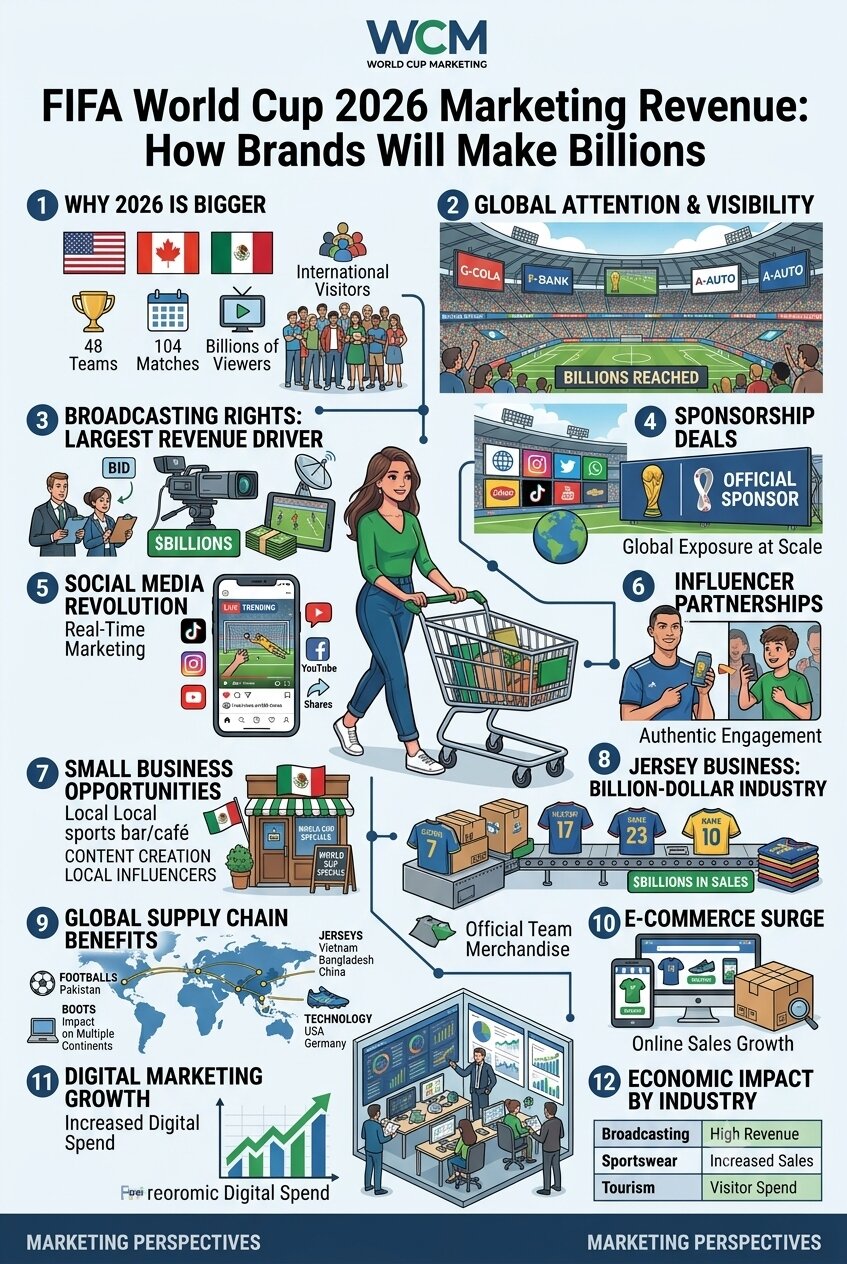
The FIFA World Cup 2026 is expected to be the biggest tournament in football history. For the first time, the competition will feature 48 teams instead of 32 and will be hosted across three countries: the United States, Canada, and Mexico. With more teams, more matches, and more viewers than ever before, the tournament is set to become a goldmine for broadcasters, sponsors, advertisers, and digital marketers.
While fans focus on what happens on the pitch, global brands are preparing to spend billions of dollars competing for attention. From television commercials and sponsorship deals to influencer campaigns and social media promotions, the World Cup has become one of the most valuable marketing platforms in the world.
In this article, we’ll explore how FIFA World Cup 2026 Marketing Revenue and how Brands Will Make Billions or trillions, why companies are investing heavily in the tournament, and what businesses of all sizes can learn from one of the greatest marketing events on the planet.
Why FIFA World Cup 2026 Is Bigger Than Any Previous Tournament
The FIFA World Cup has always been a massive global event, but the 2026 edition is different.
For the first time in history:
- 48 national teams will participate.
- 104 matches will be played.
- Three countries will host the tournament.
- Millions of international visitors are expected to travel for the event.
- Billions of viewers will watch across television and digital platforms.
This expansion creates a significant increase in opportunities for businesses and advertisers.
More matches mean more broadcasting hours. More broadcasting hours mean more advertising space. More advertising space means more revenue.
In simple terms, FIFA World Cup 2026 is not just a sporting event—it is a global marketing machine.
The Power of Global Attention
In today’s digital world, attention is one of the most valuable assets a business can acquire.
Companies spend millions of dollars every year trying to reach consumers through social media, search engines, email campaigns, and traditional advertising. Yet very few events can guarantee access to a worldwide audience.
The World Cup can.
During the tournament, people from nearly every country follow the matches, discuss results online, share highlights, and engage with football-related content daily.
For marketers, this level of engagement is priceless.
Think about it. If a company can place its brand in front of billions of viewers during a major World Cup match, the exposure could equal years of traditional advertising efforts.
That is why global brands continue to invest heavily in FIFA sponsorships.
The World Cup creates a rare opportunity where attention, emotion, and audience size all come together at the same time.
Broadcasting Rights: The Largest Revenue Driver
When discussing World Cup marketing revenue, broadcasting rights are the biggest piece of the puzzle.
Television networks and streaming platforms pay enormous sums for the rights to broadcast World Cup matches because they know advertisers are willing to pay premium prices to reach viewers.
Live sports remain one of the few types of content that audiences prefer to watch in real time. Unlike movies or television series, fans want to experience football matches as they happen.
This creates a unique advantage for advertisers.
A commercial shown during a World Cup match is almost guaranteed to be seen by millions of viewers at the exact same moment.
For broadcasters, this means higher advertising rates.
For FIFA, it means billions of dollars in media revenue.
As digital streaming continues to grow, competition for broadcasting rights is becoming even more intense. Traditional television networks now compete with streaming platforms and digital media companies for access to premium sports content.
The result is a bidding war that pushes media rights values higher every tournament cycle.
Why Brands Spend Billions on World Cup Sponsorships
Many people wonder why companies are willing to spend millions—or even hundreds of millions—on sports sponsorships.
The answer is simple: visibility.
The World Cup provides something that very few marketing campaigns can offer—global exposure at scale.
Official sponsors gain access to:
- Worldwide brand recognition
- Stadium advertising
- Digital content partnerships
- Event activation
- Fan engagement campaigns
- Exclusive marketing rights
Companies such as beverage brands, financial institutions, technology firms, and automotive manufacturers see the World Cup as an opportunity to strengthen their position in global markets.
A successful sponsorship campaign can improve brand awareness, increase customer trust, and create long-term loyalty among consumers.
For multinational corporations, the investment often pays for itself through increased sales and brand value.
The Social Media Revolution Is Changing World Cup Marketing
One of the biggest differences between World Cup 2026 and previous tournaments is the role of social media.
In earlier decades, marketing was dominated by television advertisements and print media.
Today, platforms such as Instagram, TikTok, YouTube, Facebook, and X have transformed how brands connect with audiences.
A single viral moment can generate millions of views within hours.
When a player scores a spectacular goal or a team creates an unforgettable upset, social media explodes with reactions, memes, and discussions.
Smart brands take advantage of these moments through real-time marketing.
Instead of waiting days to launch a campaign, marketers can create content instantly and join the conversation while public interest is at its highest.
This ability to react quickly creates enormous opportunities for engagement and brand visibility.
During World Cup 2026, social media is expected to become one of the most important marketing channels for brands worldwide.
The Rise of Influencer Marketing During Global Sporting Events
Influencer marketing has become one of the fastest-growing sectors in digital advertising.
Rather than relying solely on traditional commercials, companies are partnering with content creators who already have loyal audiences.
Football influencers, sports analysts, YouTubers, TikTok creators, and podcasters are expected to play a major role during the tournament.
These creators can generate millions of views while discussing matches, sharing predictions, analyzing performances, and reacting to breaking news.
For brands, influencer partnerships offer several advantages:
- Higher engagement rates
- More authentic communication
- Better audience targeting
- Increased trust among younger consumers
As the creator economy continues to expand, influencer marketing will become an even larger contributor to World Cup-related advertising revenue.
How Small Businesses Can Benefit from World Cup Marketing
You don’t need a billion-dollar budget to benefit from the FIFA World Cup.
Small businesses can also take advantage of the increased online attention surrounding the tournament.
Some practical strategies include:
1. Create Relevant Content
Write blog posts, videos, and social media content related to football, marketing, or business lessons from the World Cup.
2. Use Real-Time Marketing
React to important moments during matches and engage with trending conversations.
3. Run Themed Promotions
Offer special discounts or campaigns linked to major matches.
4. Collaborate with Local Influencers
Partner with creators who have engaged audiences in your niche.
5. Focus on Community Building
Encourage discussions, predictions, and fan engagement around tournament-related topics.
The brands that win during major events are often the ones that participate in conversations rather than simply advertising products.
The Hidden Global Economy Behind FIFA World Cup 2026
When most people think about the FIFA World Cup, they imagine packed stadiums, passionate fans, and world-class football. However, the tournament’s economic impact extends far beyond the pitch.
Behind every match is a massive global network of manufacturers, suppliers, retailers, logistics providers, and marketing agencies working together to meet demand from billions of football fans worldwide.
In reality, the World Cup benefits dozens of countries, even those that never qualify for the tournament.
From football manufacturing in Asia to jersey production in Europe and Latin America, businesses around the world generate billions of dollars in revenue thanks to football’s biggest event.
Which Countries Benefit Most From the World Cup Supply Chain?
The World Cup creates demand for thousands of products, including:
- Footballs
- Team jerseys
- Boots
- Training equipment
- Fan merchandise
- Stadium technology
- Broadcasting equipment
- Flags and banners
- Digital marketing services
Major World Cup Supply Chain Beneficiaries
The manufacturing of these products is spread across many countries.
| Industry | Leading Countries Benefiting |
|---|---|
| Football Manufacturing | Pakistan, China, India |
| Team Jerseys & Sportswear | Vietnam, China, Indonesia, Bangladesh |
| Football Boots | Vietnam, Indonesia, China |
| Fan Merchandise | China, India, Turkey |
| Broadcasting Equipment | Japan, South Korea, Germany |
| Stadium Technology | United States, Germany, United Kingdom |
| Logistics & Shipping | Singapore, UAE, Netherlands |
| Digital Marketing & Advertising | USA, UK, India, Canada |
| Hospitality & Tourism | USA, Mexico, Canada |
This demonstrates that the economic impact of the World Cup spreads across multiple continents.
Pakistan: The Country Behind Many of the World’s Footballs
One of the most fascinating World Cup business stories comes from Pakistan.
The city of Sialkot has been producing footballs for decades and is widely recognized as one of the world’s leading football manufacturing hubs.
Many official tournament footballs and high-quality match balls originate from factories in this region.
During World Cup years, demand for footballs rises significantly as retailers, clubs, schools, and fans purchase new equipment.
For manufacturers in Pakistan, a major tournament can bring millions of dollars in additional business.
Bangladesh Benefits More Than Many People Realize
This section is especially valuable for your Bangladeshi audience.
Many football fans in Bangladesh may not realize that the country’s garment industry indirectly benefits from global football events.
Several major sportswear brands manufacture products in Bangladesh, including:
- Fan apparel
- Sportswear
- Training gear
- Promotional clothing
When global demand for football merchandise increases, factories often receive larger orders from international brands.
Although Bangladesh may not be playing in the World Cup, its manufacturing sector still participates in the global football economy.
How the Jersey Business Becomes a Billion-Dollar Industry
Few products are as closely connected to football as the team jersey.
Fans buy jerseys for many reasons:
- Supporting their national team
- Collecting limited editions
- Following favorite players
- Wearing tournament merchandise
A successful national team can sell millions of jerseys during a single tournament.
Why Jersey Sales Matter
| Revenue Driver | Business Impact |
|---|---|
| Official Team Jerseys | Direct merchandise revenue |
| Player Name Printing | Premium pricing opportunities |
| Limited Edition Releases | Higher profit margins |
| Online Sales | Global customer reach |
| Licensing Agreements | Long-term brand revenue |
| Business Type | Benefit During World Cup |
|---|---|
| E-commerce Stores | Increased merchandise sales |
| Payment Providers | Higher transaction volume |
| Courier Services | Increased deliveries |
| Warehousing Companies | Higher storage demand |
| Online Marketplaces | Increased traffic and advertising revenue |
Why Digital Marketing Agencies Love the World Cup
For digital marketers, the World Cup is one of the most valuable periods for customer engagement.
Brands increase spending on:
- Social media advertising
- Influencer marketing
- Video production
- Search engine marketing
- Email campaigns
- Content marketing
Many companies allocate special budgets specifically for World Cup-related campaigns.
Marketing agencies often experience a significant increase in demand as brands compete for audience attention.
This is one reason why FIFA World Cup 2026 is expected to generate billions in marketing revenue beyond traditional sponsorship deals.
Economic Impact by Industry
The following table shows how different sectors benefit from the tournament.
| Industry | Expected Benefit |
|---|---|
| Broadcasting | Billions in advertising revenue |
| Sponsorships | Global brand exposure |
| Sportswear | Increased product sales |
| Manufacturing | Higher production demand |
| Tourism | Millions of visitors |
| Hospitality | Hotel and restaurant revenue |
| Transportation | Increased travel bookings |
| Digital Marketing | Advertising campaign growth |
| E-commerce | Merchandise sales surge |
| Content Creation | Higher audience engagement |
FAQ Section
How much revenue is FIFA World Cup 2026 expected to generate?
FIFA expects the tournament to generate close to $9 billion in total revenue through broadcasting rights, sponsorships, ticket sales, hospitality, licensing, and other commercial activities.
Which countries benefit from the FIFA World Cup besides the host nations?
Many countries benefit indirectly through manufacturing, sportswear production, merchandise sales, logistics, tourism, broadcasting, and digital marketing services. Countries such as Pakistan, China, Vietnam, Bangladesh, Indonesia, Germany, Japan, and the United Kingdom all participate in different parts of the football supply chain.
Why do companies spend billions on World Cup marketing?
The World Cup attracts billions of viewers worldwide, giving brands access to one of the largest global audiences available. This level of visibility helps increase brand awareness, customer engagement, and sales.
How does the World Cup help small businesses?
Small businesses can benefit by creating football-related content, running themed promotions, partnering with influencers, and using social media to engage audiences during the tournament.
Does Bangladesh benefit from the FIFA World Cup?
Yes. Bangladesh’s garment industry produces apparel and sportswear for many international brands. Increased demand for football-related merchandise can create additional manufacturing opportunities for local factories.
What products see the biggest sales increase during the World Cup?
Popular products include football jerseys, footballs, boots, scarves, flags, collectibles, training equipment, and fan merchandise.
Final Thoughts
The FIFA World Cup 2026 is much more than a football tournament. It is one of the largest marketing and business opportunities in the world.
With billions of viewers, expanded tournament formats, global sponsorship deals, digital advertising campaigns, influencer partnerships, and unprecedented social media engagement, the event is expected to generate billions of dollars in marketing revenue.
For global corporations, it represents a chance to reach massive audiences. For broadcasters, it offers premium advertising opportunities. For content creators, it provides endless engagement potential. And for small businesses, it serves as a powerful lesson in how attention can be transformed into growth.
As the countdown to FIFA World Cup 2026 continues, one thing is clear: the biggest competition won’t only happen on the football field. It will also take place in the marketing world, where brands battle for the attention of billions of fans across the globe.



0 Comments